
The Intel D80872: The Unsung Math Coprocessor of the 80386 Era
In the annals of personal computing history, the Intel 80386 microprocessor is rightly celebrated for bringing 32-bit computing to the masses, revolutionizing software and multitasking capabilities. Yet, operating often in its shadow was a specialized component that supercharged the number-crunching abilities of these systems: the Intel D80872 math coprocessor.
Commonly known as the 387, this chip was not a standalone CPU but an auxiliary processor designed to work in tandem with the main 386. Its sole purpose was to handle the complex mathematical operations that the main CPU found slow and cumbersome, particularly floating-point arithmetic. For engineers, scientists, financial analysts, and early CAD users, the 387 was the definitive key to unlocking serious computational performance.
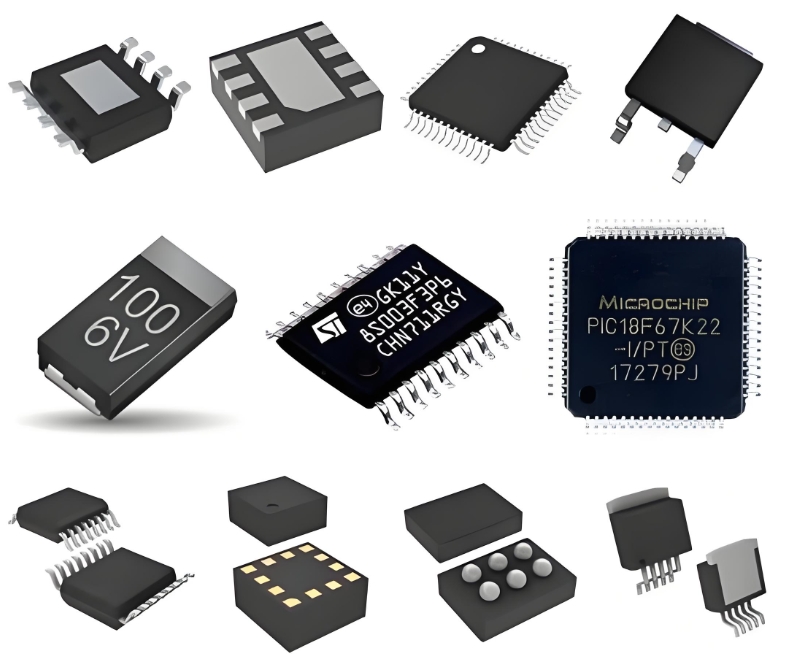
Before its integration directly into the CPU die with later processors like the 486DX, the math coprocessor was a separate, physical chip that required its own socket on the motherboard. The installation of a D80872 transformed a capable general-purpose computer into a computational powerhouse. Applications optimized to use it, such as AutoCAD, MATLAB, and early 3D rendering software, could see performance improvements of anywhere from 50% to a staggering 500% in mathematical workloads. This was not a minor upgrade; it was a fundamental shift in capability.
The D80872 was more than just hardware acceleration; it implemented the IEEE 754 floating-point standard with much greater precision and accuracy than the emulated software routines the 386 was forced to use on its own. This meant that complex calculations were not only dramatically faster but also more reliable and correct, a critical requirement for scientific and technical computing.
Despite its power, the 387 remained a niche component. Its high cost placed it out of reach for the average consumer, who had little use for its advanced capabilities in word processing or playing games (most of which used integer math). Consequently, its story is often overlooked in the broader narrative of PC evolution. However, for those who needed it, the impact of the D80872 was nothing short of revolutionary, defining the professional computing experience of its era.
ICGOOODFIND: The Intel D80872 stands as a brilliant example of specialized hardware acceleration, a critical bridge between the early days of software emulation and the modern era of integrated floating-point units. It delivered transformative performance for professional applications, cementing its legacy as a foundational technology for technical computing on the PC platform.
Keywords: Math Coprocessor, Floating-Point Unit, Intel 80386, Hardware Acceleration, Computational Performance

